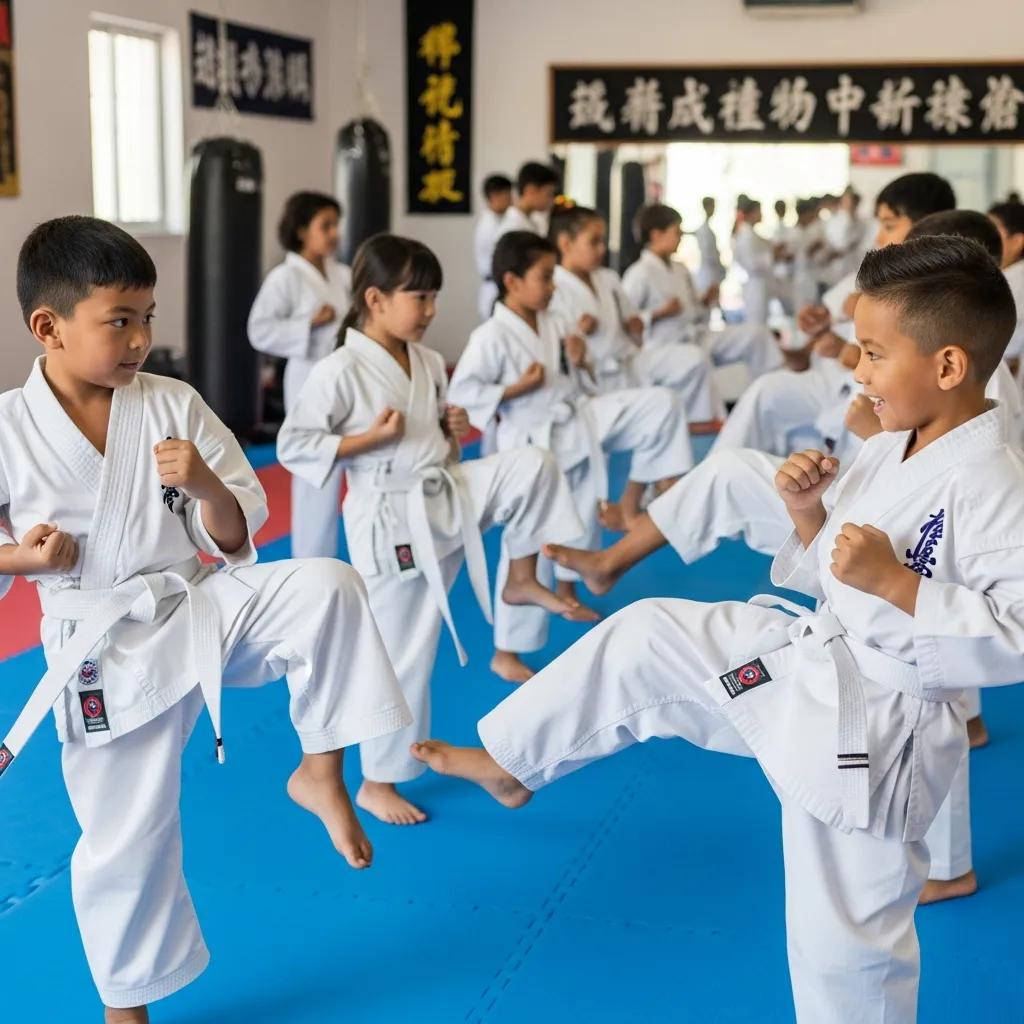
Discover Kids Karate Classes Near Me for Confidence and Fun
Join Chad Love's Karate in Clermont, FL: Unlock Your Child's Confidence & Discipline
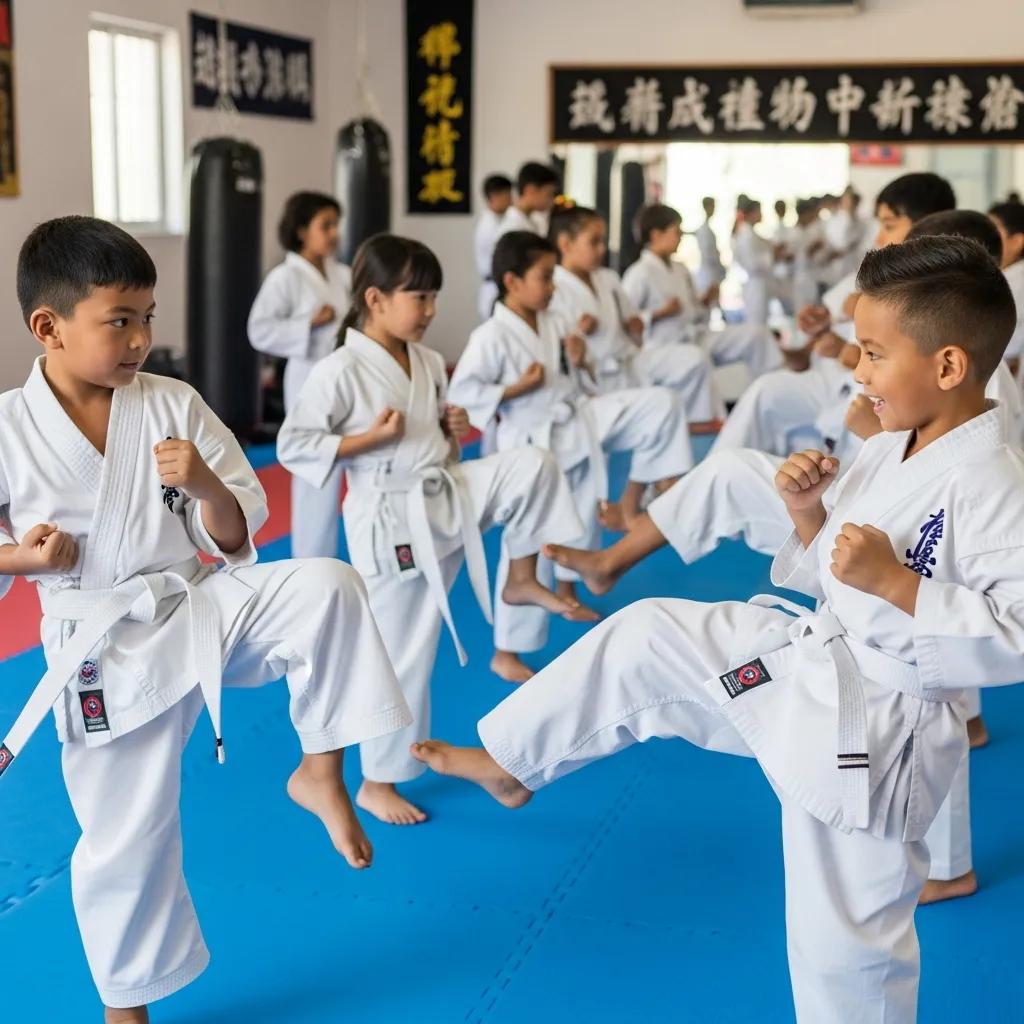
Hello, my name is Chad Love, and I want to personally invite you to join me at my Karate school in Clermont, FL. With over 35 years of experience in Martial Arts and over 25 years as a Martial Arts Instructor, I've dedicated my life to teaching the profound benefits of karate. It's more than just a form of martial arts; it's a discipline that teaches respect, self-discipline, focus, and confidence. Through our dynamic martial arts training, children, teens, and adults can develop important physical and mental skills that will help them succeed in all aspects of life. Our comprehensive curriculum not only focuses on strong fundamentals but also advanced techniques, forms (kata's), sparring, and weapons, ensuring a well-rounded and engaging learning experience. You'll also have fun, make new friends, and train with me and my dedicated team of instructors. Let's discover your inner warrior! This guide will further explain how our karate programs boost confidence and discipline, detail our age-appropriate options, show how classes improve fitness and self-defense, outline our thoughtful curriculum, and guide you on how to enroll in a free trial class at our Clermont academy. Expect practical selection advice, observable outcomes backed by recent research, and clear enrollment steps to help you evaluate our programs efficiently. Throughout, you'll find actionable tips for observing class dynamics, comparing preschool versus junior and teen programs, and a simple checklist for trial visits to help decide what’s best for your child.
Why Choose Kids Martial Arts for Building Confidence and Discipline?
Kids martial arts combines structured physical training with social and psychological coaching to develop confidence and discipline through clear goals, routine, and feedback. The mechanism is straightforward: incremental skill mastery (belt progression) creates measurable wins, instructor feedback reinforces effort, and public demonstrations or tests provide safe opportunities for positive recognition. Recent studies and education-focused reviews indicate that goal-oriented extracurriculars improve self-esteem and executive function in children, supporting the claim that martial arts can produce transferable benefits to school and social situations. Parents commonly report improved task persistence and willingness to try new activities after a child experiences consistent martial arts progress. Below is a concise list of the most consistent benefits parents observe across our kids karate programs.
Further supporting these observations, a comprehensive review of martial arts participation among young people confirms a wide array of physical and psychological advantages.
Martial Arts Benefits for Youth: Physical & Psychological Growth
The findings indicated a broad spectrum of positive outcomes, including improvements in strength, flexibility, cardiovascular health, and weight management, along with enhanced self-esteem, emotional regulation, and reduced aggression.
Martial Arts for Young People? A Review of the Benefits and Outcomes of Children's and Adolescents' Participation in Martial Arts, RP Bailey, 2025
Increased self-confidence through visible milestones and public skill demonstrations.
Stronger focus and discipline fostered by structured practice and etiquette.
Improved social skills and respect developed through partner drills and dojo culture.
Better physical coordination and stamina supporting overall well-being.
These benefits make martial arts a practical choice for parents seeking an activity that blends physical fitness with character development. The next section explains exactly how belt systems and instructor feedback translate into lasting self-esteem gains for children.
Schedule Your FREE Trial Class!
Ready to Start Your Journey?
Experience the benefits of our programs firsthand. Join Chad Love and his team!
How Does Karate Boost Child Confidence and Self-Esteem?
Karate builds confidence by creating a predictable progression of skill milestones that children can achieve and demonstrate, which reinforces self-efficacy through repeated success. Belt progression and small wins give children concrete evidence of improvement, and instructor praise plus peer recognition during classes or belt tests further consolidates that belief in their abilities. Research on youth sports and structured extracurriculars suggests that mastery experiences are among the strongest predictors of increased self-esteem, especially when coupled with supportive coaching. For example, a shy child who masters a sequence of kicks and receives positive feedback often shows more willingness to participate in class presentations and school activities. Understanding these mechanisms clarifies why consistent, age-appropriate milestones are central to confidence-building in karate programs.
What Role Does Discipline and Focus Play in Child Development?
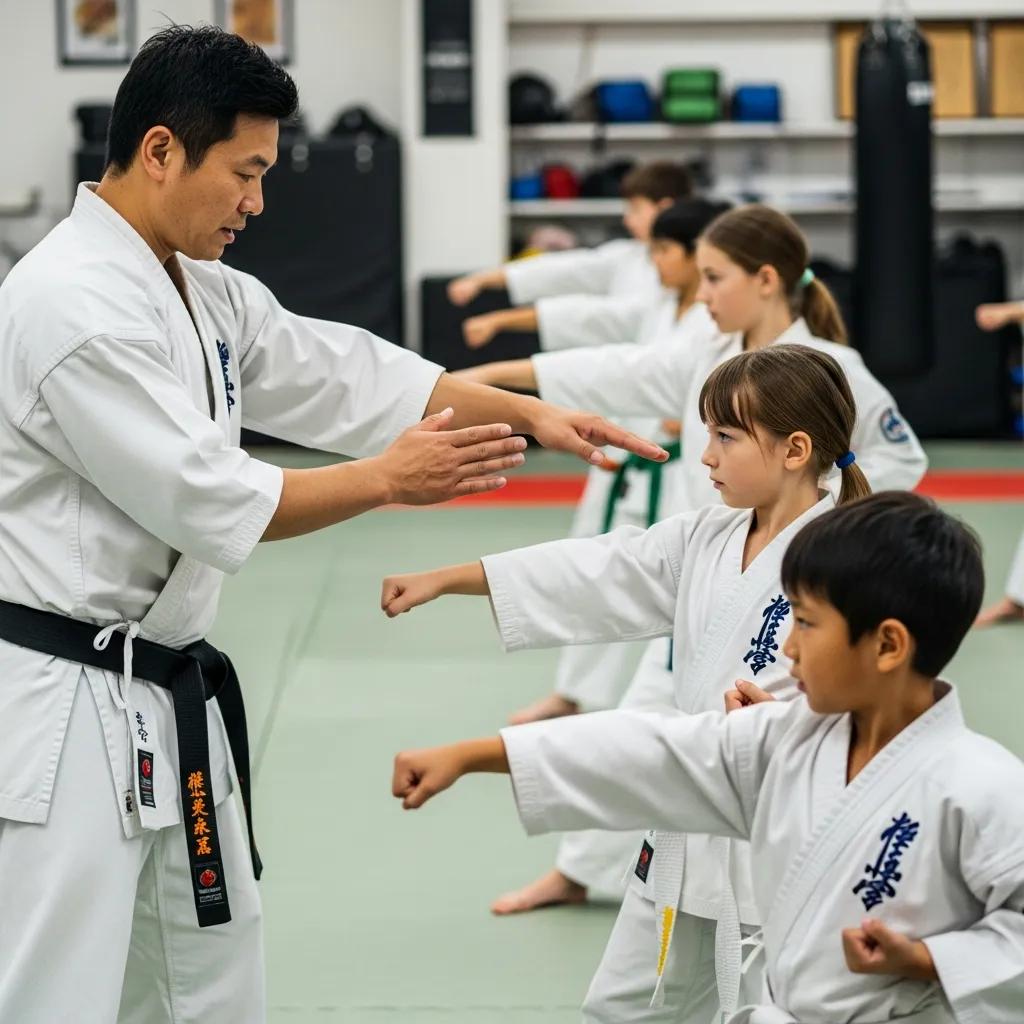
Discipline and focus developed through martial arts practice improve executive functions—such as working memory, impulse control, and sustained attention—by training children in routines, rules, and goal-directed activity. Regular class structure, warm-up drills, and formal etiquette require children to practice self-control and attention in short, repeatable cycles that gradually increase in complexity. Evidence from educational psychology indicates that consistent practice of regulated routines transfers to classroom behavior improvements, including better listening skills and fewer impulsive actions. Parents often notice that children who participate in martial arts complete homework more reliably and show improved patience in group settings. These classroom-ready behaviors arise from the daily practice of self-discipline and structured focus within dojo life.
What Age-Specific Kids Karate Programs Are Available at Our Academy?
Age-specific karate programs tailor content and pacing to developmental stages so children learn skills that match their motor, cognitive, and social capacities. Preschool karate focuses on short-format activities, simple motor tasks, and listening skills; elementary programs expand technical skills, partner work, and goal-setting; teen classes emphasize leadership, advanced technique, and peer mentoring. Choosing the right program depends on your child’s attention span, social comfort, and physical readiness rather than chronological age alone. The table below summarizes typical age brackets, program focus, and expected outcomes to help parents compare options quickly and make a selection that aligns with developmental needs.
Age GroupFocus / Skills TaughtTypical Outcomes / DurationPreschool (3–5)Fundamental movement, short attention activities, basic etiquetteImproved motor skills and listening in 8–12 week cyclesElementary (6–11)Technique basics, partner drills, belt progressionNoticeable skill gains and increased confidence within 3–6 monthsJuniors/Teens (12–17)Leadership roles, advanced kata/forms, conditioningLeadership opportunities and measurable discipline gains over a semester
This comparison clarifies how program design aligns with developmental goals and helps parents select an age-appropriate class that balances challenge and support. The following subsection explains the specific developmental benefits for preschool-aged children.
What Are the Benefits of Karate for Preschoolers?
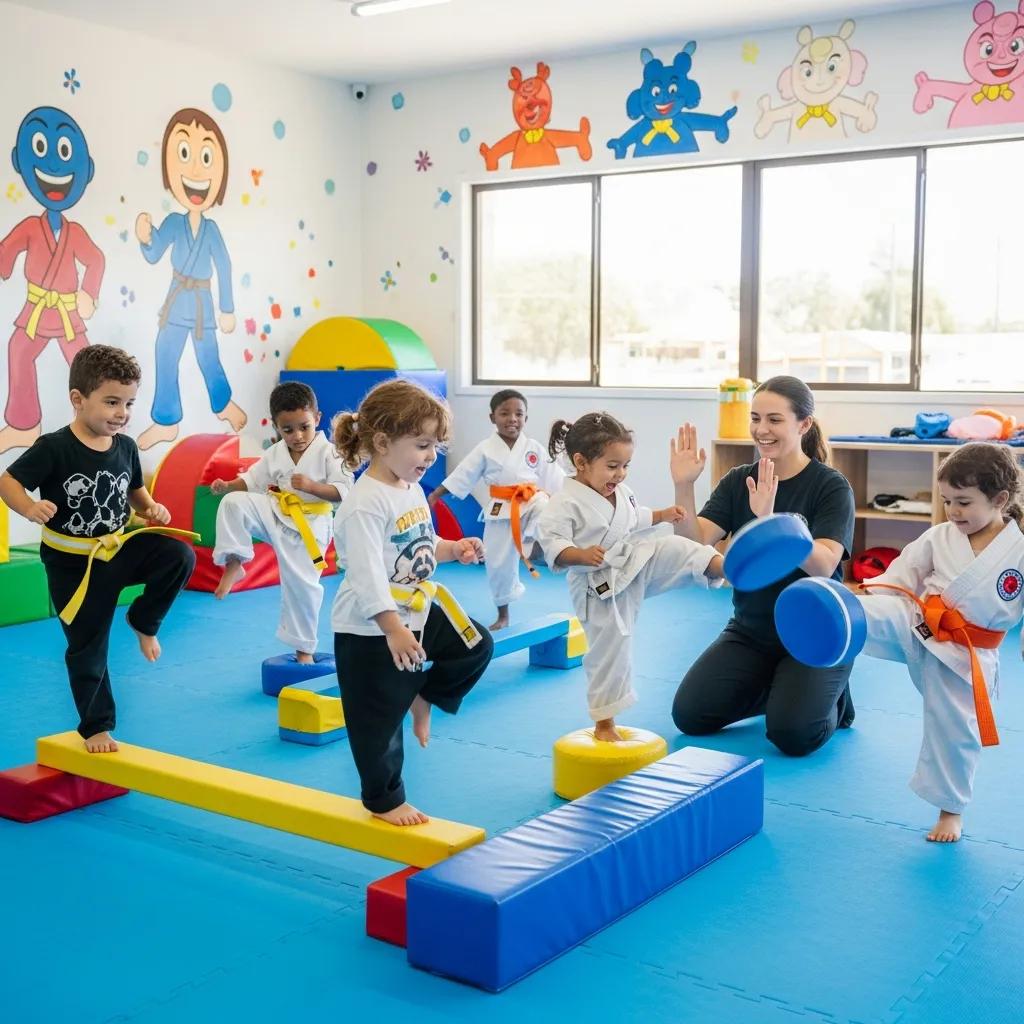
Preschool karate emphasizes safe, play-based drills that develop gross motor skills, basic coordination, and early social cues like turn-taking and listening. Activities are short, repetitive, and varied to match young attention spans, and instructors use simple, positive reinforcement to encourage participation. Typical class structures include warm-up games, basic stance and kick practice, and a calm cooldown to transition children out of high-energy play. These sessions often lead to measurable improvements in balance, spatial awareness, and the ability to follow multi-step instructions, which parents can observe in home routines and classroom settings. Early exposure also reduces anxiety about group activities and sets the foundation for longer-term discipline and confidence.
How Do Elementary and Teen Programs Foster Respect and Leadership?
Elementary and teen programs build on early foundations by introducing mentorship, structured goal-setting, and explicit leadership roles such as assistant responsibilities or peer coaching. As children progress through belt levels, they receive specific leadership tasks—helping younger students or demonstrating techniques—which promotes responsibility and respect for others. Teen curricula increasingly emphasize conflict resolution, respectful communication, and opportunities to lead drills, all of which translate to improved classroom participation and peer relationships. Measurable outcomes often include increased willingness to take initiative, enhanced group cooperation, and better behavior in structured environments. This progression demonstrates how martial arts cultivate both technical skill and social leadership over time.
How Does Martial Arts Improve Physical Fitness and Self-Defense Skills in Children?
Martial arts training develops multiple physical systems simultaneously—coordination, balance, agility, strength, and cardiovascular endurance—through age-appropriate drills and progressive practice. The mechanism involves repeated neuromuscular patterns (kata/form practice, partner drills, and dynamic warm-ups) that build motor planning and muscular endurance while keeping children engaged through varied activities. Self-defense instruction in kids’ classes focuses on awareness, avoidance, boundary-setting, and simple escape techniques taught safely and non-violently, ensuring practical safety skills without promoting aggression. Below is a clear EAV-style table that links specific skill areas to training methods and measurable benefits so parents can see how each practice component translates into real-world improvements.
Skill AreaHow It's TrainedBenefit / MetricCoordinationBalance drills, footwork patternsImproved gross motor control and reduced fall riskAgilityPartner reaction drills, obstacle sequencesFaster directional changes and improved sports performanceEnduranceCircuit-style conditioning, continuous sequencesIncreased stamina measured by longer sustained activitySituational AwarenessRole-play, scenario trainingBetter recognition of unsafe situations and avoidance behavior
This table makes the benefits concrete and measurable, showing how regular practice produces quantifiable fitness and safety gains. The next two subsections detail coordination improvements and the self-defense skills children learn in class.
Which Physical Coordination and Fitness Benefits Do Kids Gain from Karate?
Karate develops balance, timing, and motor planning through repetitive technique work and dynamic drills that require precise foot placement and coordinated limb movements. Training includes progressive balance challenges, timed sequences to build rhythm, and partner work that enhances proprioception and reaction time. Over weeks of consistent practice, children typically show measurable improvements in agility tests and endurance during recreational activities, reflecting better overall fitness. Parents can reinforce these gains at home with short drills—such as single-leg balance holds and timed obstacle courses—that mirror dojo activities and help solidify motor skills. These visible fitness gains often boost confidence and encourage continued participation in physical activities.
Indeed, research highlights how specialized training, like the Karate Agility Course, is designed to specifically enhance children's fundamental motor skills and overall physical development.
Karate Agility: Enhancing Children's Motor Skills
Development of general motor skills appears to be the key factor in achieving maximum success in sports at an older age. To prevent burn-out and early specialisation, the Slovak Karate Union introduced a new competition discipline – the Karate Agility Course (KAC), where young karateka apply their fundamental motor skills.
Karate agility: The new competition category for children's physical development with very high test/re-test reliability, 2020
What Essential Self-Defense Skills Are Taught in Kids Karate Classes?
Self-defense in kids’ karate focuses on non-violent strategies: situational awareness, assertive communication, avoidance, and simple breakaway techniques that prioritize safety and escape over confrontation. Instructors teach children how to recognize unsafe situations, use their voice assertively, and create space to get to a safe adult or call for help. Physical techniques are designed to be age-appropriate—basic wrist-release moves, safe blocking, and controlled distancing—practiced with strict safety protocols and partner supervision. These skills increase a child’s confidence and ability to respond calmly in stressful situations, and they are taught alongside lessons about respect and seeking help. Practicing these principles at home or in supervised role-play helps children internalize safety-first responses.
What Should Parents Expect from Our Kids Karate Curriculum and Instructors?
A thoughtful kids karate curriculum combines progressive skill milestones, age-specific learning modules, safety protocols, and regular assessments to track growth beyond belt color. Curriculum components typically include warm-up and motor-skill development, technique and form practice, partner drills for social learning, and periodic evaluations that measure competence and readiness for the next level. Instructors are trained to deliver positive reinforcement, scaffold challenges, and communicate progress to parents through short updates or skill checklists. Below is an EAV-style table describing common curriculum elements, applicable age ranges, and typical learning outcomes so parents understand how skill development and assessment are organized.
Curriculum ComponentAge RangeLearning Outcome / Assessment MethodMotor Skill Warm-ups3–7Improved balance and attention; observed checklistsTechnique & Forms6–17Skill mastery assessed via belt exams and skill rubricsPartner Drills6–17Social cooperation and impulse control; instructor observationLeadership Modules10–17Mentoring ability measured by assistant tasks and peer feedback
This structure helps parents see how progress is tracked and how instructors evaluate readiness for advancement.
Schedule Your FREE Trial Class!
Ready to Start Your Journey?
Experience the benefits of our programs firsthand. Join Chad Love and his team!
How Is the Age-Appropriate Curriculum Structured for Child Growth?
Curriculum structure is typically tiered by age and belt level, with clear milestones that match motor and cognitive development stages and regular assessments to measure growth. Lessons progress from fundamental movement and basic etiquette in preschool classes to technical repetition and scenario training in elementary programs, and finally to leadership, conditioning, and advanced forms for teens. Assessment methods include weekly skill checklists, periodic belt exams, and instructor observations documented in short reports to parents. This approach ensures that each child advances on demonstrated competence, not merely attendance, and provides transparent criteria parents can review to track development. Clear milestones and assessment cadence make progress meaningful and predictable for families.
Who Are the Instructors and How Do They Support Child Development?
Instructors in quality kids karate programs focus on youth teaching experience, safety training, and positive behavior coaching rather than solely on technical credentials. Their role includes modeling respectful behavior, breaking skills into manageable steps, and offering frequent, specific praise that reinforces effort and progress. In-class coaching uses tangible feedback—skill checklists and short demonstrations—to help children internalize goals and understand next steps, while periodic parent updates clarify progress and areas for focus. Parents should look for instructors who prioritize safety, maintain structured class management, and communicate progress clearly; these traits create a consistent learning environment that supports both skill acquisition and character development.
How Can Parents Enroll Their Child in a Free Trial Karate Class at Our Academy?
Enrolling in a trial class is a straightforward process designed to let parents and children evaluate program fit before committing to registration. The steps below outline a common enrollment flow, what to bring, and what to expect during the trial so families can arrive prepared and make an informed decision afterward.
Contact the academy to express interest and request available trial times.
Schedule the free trial at a time that matches your child’s peak attention and energy.
Attend the trial class with appropriate attire (comfortable clothes) and arrive a few minutes early.
Observe class dynamics, instructor engagement, and safety protocols; ask brief questions afterward.
If you decide to enroll, follow the academy’s registration and payment instructions provided after the trial.
These steps help parents see how the program operates in practice and decide whether the environment meets their child’s needs.
Schedule Your FREE Trial Class!
Ready to Start Your Journey?
Experience the benefits of our programs firsthand. Join Chad Love and his team!
What Is the Enrollment Process for Kids Martial Arts Programs?
The enrollment process typically begins with an inquiry and scheduling of a free trial, followed by registration if you choose to continue after the trial. Most programs require a simple registration form, a review of safety policies, and selection of class times that fit your schedule. Expect the instructor or staff to provide an overview of curriculum progression, belt requirements, and payment or membership options during the registration conversation. If you have scheduling concerns, ask about make-up classes or flexible attendance policies; these are common FAQs that academies address for busy families. This streamlined sequence ensures parents can try before committing and obtain clear information about next steps and expectations.
How Do Free Trial Classes Help Parents and Children Decide?
Free trial classes let parents observe instructor-child interaction, class management, and how children respond to the format, which together reveal whether the program fits your child’s temperament and learning needs. During a trial, parents should assess classroom safety, the instructor’s ability to engage all students, and whether the child displays comfort or enthusiasm; these are reliable indicators of long-term fit. Here is a short checklist parents can use after a trial to guide decision-making.
Instructor gives clear, positive directions and manages safety consistently.
Child shows interest or comfort during activities and responds to encouragement.
Class structure balances skill practice, play, and clear transitions.
What Do Parents Say About the Impact of Kids Karate on Their Children?
Parents commonly report improvements in confidence, focus, and behavior after consistent participation in kids karate programs, often citing measurable changes within a few months of regular classes. These observations align with research showing that structured, goal-oriented activities support social-emotional development and executive function. Typical parent questions focus on safety, how soon improvements appear, and whether martial arts suit children with attention challenges; concise answers to these items follow in the next subsection. Below are short, anonymized vignettes that illustrate common success patterns parents describe, highlighting observed gains in social confidence and classroom behavior.
A previously shy child begins volunteering in class demonstrations and participates more in school presentations.
A child with focus challenges shows improved homework routines and reduced classroom disruptions after several months.
An older child takes on mentoring responsibilities, demonstrating leadership and better peer relations.
These patterns indicate how karate’s combination of milestones, coaching, and social structure contributes to measurable changes in behavior and academic engagement. The final subsections answer common parental questions and present a few illustrative success stories.
What Are Common Questions Parents Have About Kids Martial Arts?
Parents often ask about safety, the best starting age, and whether martial arts help children with attention or behavioral challenges; answers emphasize program structure and instructor approach. Safety is typically assured through supervised partner work, progressive contact rules, and clearly enforced etiquette, while readiness often depends more on emotional and attention readiness than strict age cutoffs. For children with attention differences, instructors who use short, varied activities and clear, immediate feedback can help translate martial arts practice into improved focus. Understanding these program features helps parents choose classes that align with their child’s needs and expected outcomes.
Which Success Stories Highlight Confidence and Academic Improvements?
Short, anonymized vignettes show common outcomes parents report: a shy child who gains class participation, a student with focus issues who improves homework habits, and an adolescent whose leadership role corresponds with better grades and classroom behavior. For example, after consistent participation for a semester, several parents notice increased willingness to attempt new tasks and more positive interactions with peers and teachers. These real-world improvements reflect how repeated mastery experiences, structured routines, and social recognition within karate programs contribute to broader academic and social benefits. Parents are encouraged to observe trial classes and request outcome examples from instructors to see how the program measures and reports progress.
